Local Planning Committee
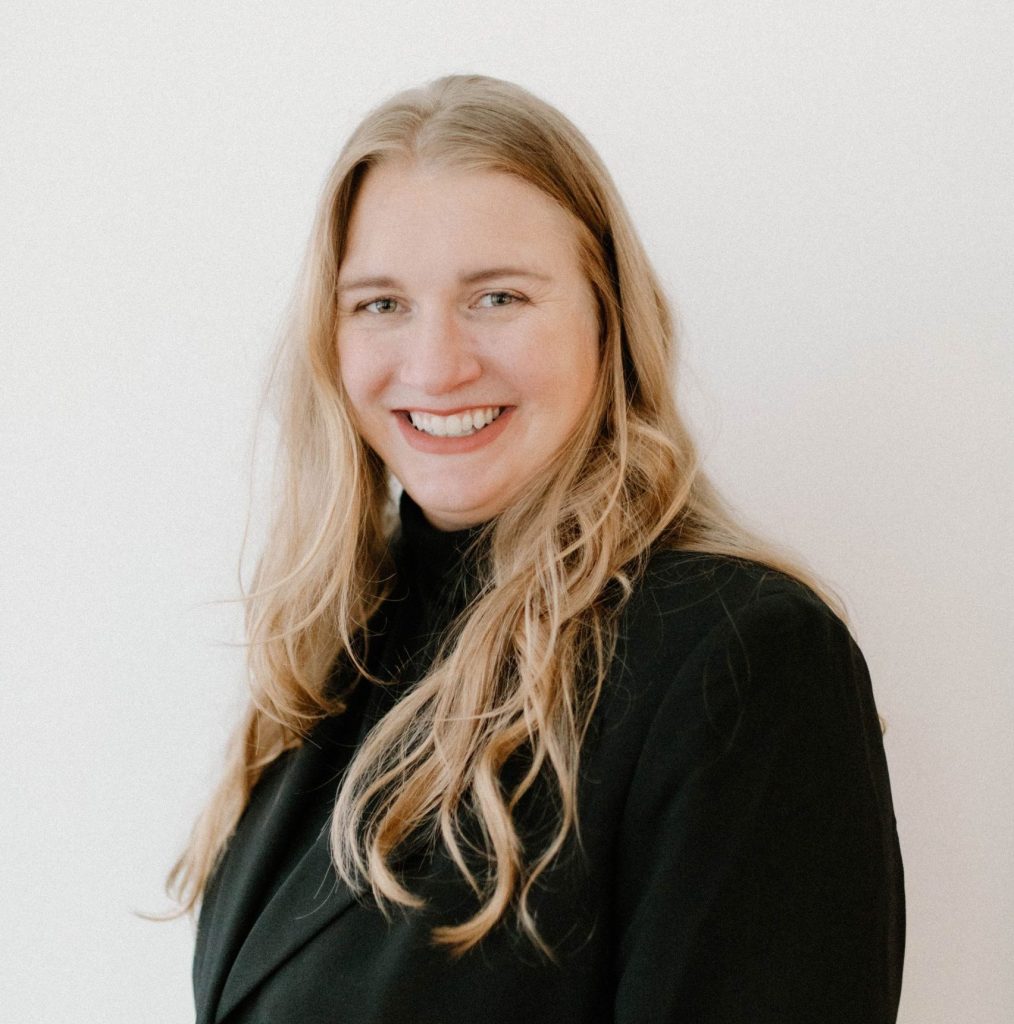
Jaclyn Fiscus-Cannaday
Jaclyn Fiscus-Cannaday is an assistant professor at the University of Minnesota, Twin Cities. She specializes in critical composition theories and pedagogies—including feminist, accessible, antiracist, queer, and linguistically informed strategies for teaching writing. Her research explores how teaching writing works, how people think teaching writing should work, and how we might learn from classrooms, communities, and writing programs that support and welcome all writers.
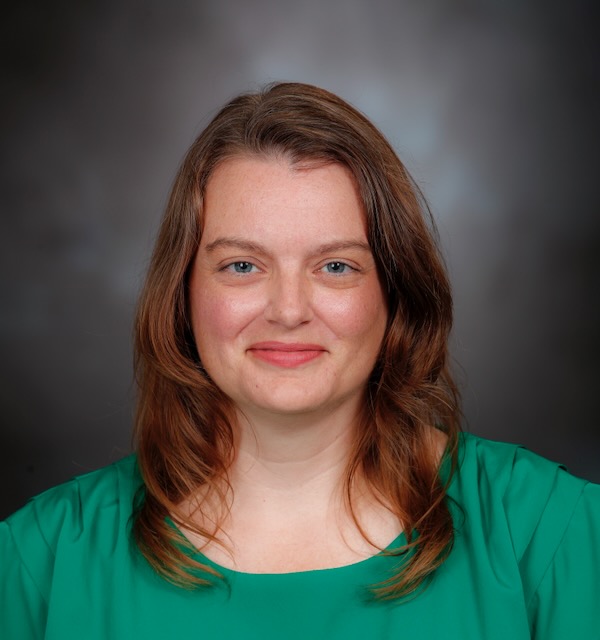
Liane Malinowski
Liane Malinowski is an assistant professor of Writing Studies at the University of Minnesota Twin Cities. Her research and teaching focus on feminist rhetorics, rhetorical history, archival methods, and public writing. She is the author of City Housekeeping: Women’s Labor Rhetorics and Spaces for Solidarity, 1886-1911. She is currently working on new research about Midwestern public memory and collaborating with students to write and circulate stories about contested or forgotten local memory sites.
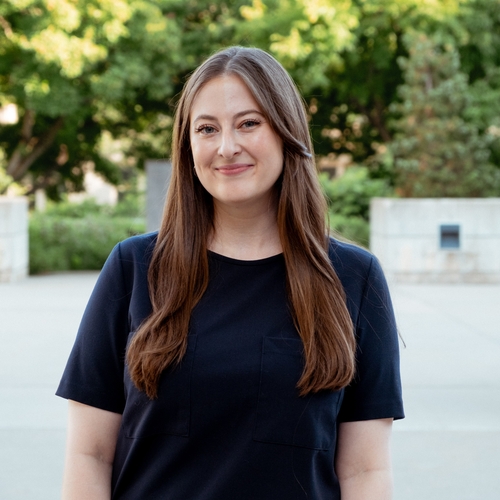
Rebecca Felter
Rebecca Felter is a PhD Candidate in Writing Studies at the University of Minnesota, Twin Cities. She specializes in rhetoric of health and medicine, disability studies, and user experience. Her doctoral research examines how power and persuasion operate in hospital patient discharge practices.

Marcus Woodman
Marcus Woodman is a PhD student in Writing Studies at the University of Minnesota, Twin Cities. He focuses on queer rhetorics, medical rhetorics, and the ways these intersect, especially with regard to trans studies.
Philosophy and commitments
FemRhet 2027 will be held in Minneapolis, MN, on the University of Minnesota Twin Cities campus. The conference site and the theme, “Feminist Rhetorics of Resistance,” are deeply intertwined. The Twin Cities have been a site of resistance to state-sanctioned violence in the wake of George Floyd’s murder in 2020 and, more recently, in the neighbor-led responses to Operation Metro Surge. Our goal for FemRhet 2027 is to create an inclusive, safe, and collaborative environment while honoring the history of and supporting ongoing resistance efforts of the Twin Cities community. In an effort to be transparent about how we are working toward these goals, we’ve outlined three key commitments that have shaped our conference planning: centering anti-racism, creating inclusivity beyond acceptance, and developing sustainable and reciprocal partnerships.
Centering anti-racism
We approach anti-racist conferencing as a shared responsibility among organizers, presenters, and participants, following Emily Johnston, Amanda Solomon Amorao, and Jonathan Kim’s (2022) discussion of collective accountability as an anti-racist conference practice. As part of registration, for example, participants will be asked to enter into a collective agreement that establishes expectations around accessibility, participation, and Q&A conduct. During the review process, for instance, reviewers will follow our guide for anti-racist proposal review. These decisions, among others, exemplify how our commitments shaped how we organize the conference itself.
That being said, that does not mean we will always get it right; we are committed to providing clear avenues for feedback and grievances so that we can listen and respond to participants’ needs. Please email jfiscusc@umn.edu if you have any questions or concerns; an anonymous portal will also be added shortly. Check back soon for the “Home” page to have an integrated survey feature.
We recognize, too, that gathering in the Twin Cities means engaging with the historical and ongoing complexities of this area. We are partnering with several local organizations to highlight these complexities throughout the conference. Check back soon for the “Community Partners” page for more information.
Creating inclusivity beyond acceptance
Karen Tellez-Trujillo (2022) reminds us that conference acceptance does not always translate into conference inclusion. We are committed to fostering sessions in which presenters can share their work without fear of hostility or exclusion, preparing moderators to facilitate respectful dialogue, and encouraging established scholars to engage emerging and graduate scholars. Through events such as our FemRhet Proposal Workshop before the conference, daily coffee chats during the conference, and a new speaking role of “works-in-progress” that will kick off a year-long writing group, we hope to encourage a supportive community and bridge new and established scholars. Additionally, during registration, we will invite participants to commit to fostering an inclusive and supportive conference environment.
Our goal is to create a worthwhile conference experience for remote participants. Through our pilot remote pathway, we are taking the first steps toward creating an integrated virtual experience that enables all scholars to participate in the FemRhet conference. While this is just the beginning of this effort, our goal is to pilot this experience and guide future FemRhet hosts toward an accessible conference for all.
Developing sustainable and reciprocal partnerships
Following Antonio Byrd, Maria Novotny, Michael Pemberton, and Vershawn Ashanti Young (2022), we are committed to enacting social justice programming and events at FemRhet 2027—supporting the needs of the Twin Cities community in addition to our own academic goals. For us, this means acknowledging and foregrounding the realities, struggles, and needs of our host cities: the Twin Cities of Saint Paul and Minneapolis. To do this, we are partnering with local organizations, engaging with local feminist scholars, and highlighting the Twin Cities’ feminist histories and archival materials. We will highlight these partnerships on our forthcoming “Community Partners” page. We are committed to building sustainable community relationships based on reciprocity, mutual benefit, and respect. All community partners will be invited to join our conference free of cost and paid equitably for their labor.
Works Cited
Tellez-Trujillo, K. (2022). What am I doing here? When conference acceptance doesn’t mean conference inclusion. Writers: Craft and Context, 3(1). Retrieved from https://journals.shareok.org/writersccjournal/ojs/writersccjournal/article/view/96
Byrd, A., Novotny, M., Pemberton, M., & Young, V. (2022). Social justice conference planning for writing studies: Frameworks, triumphs, and challenges. Writers: Craft and Context, 3(1). Retrieved from https://journals.shareok.org/writersccjournal/ojs/writersccjournal/article/view/99/41
Johnston, E. R., Amorao, A. S., & Kim, J. (2022). Sharing lessons learned: Intersectional collaboration, collective accountability, and radical care in antiracist programming. Writers: Craft & Context, 3(1), 13–23. Retrieved from https://journals.shareok.org/writersccjournal/ojs/writersccjournal/article/view/97/36